Sustainability is no longer a trend in residential design—it has become a necessity. As cities expand and environmental challenges become more pressing, homeowners are increasingly looking for homes that are energy-efficient, climate-responsive and built to last. This growing demand has encouraged architects in Bangalore to adopt sustainable architecture as a fundamental design principle rather than an optional feature.
With its moderate climate, increasing urban density and heightened environmental awareness, Bangalore provides the ideal setting for sustainable residential design. Today, residential architects in Bangalore are creating homes that combine aesthetics, functionality and environmental responsibility. By integrating passive design strategies, locally sourced materials, renewable energy and efficient water management, sustainable homes offer lower operating costs, greater comfort and a significantly reduced environmental footprint.
Why Sustainable Architecture Matters in Bangalore
Sustainable architecture goes beyond using eco-friendly materials. It is a holistic approach that considers how a home responds to its climate, site, orientation and the lifestyle of its occupants. A well-designed sustainable home consumes less energy, conserves water, improves indoor comfort and reduces long-term maintenance.
For architects in Bangalore, designing sustainably begins with understanding the city’s unique climate. Careful orientation can minimise heat gain from the harsh western sun, while large shaded openings, courtyards and cross ventilation encourage natural cooling. These passive design strategies reduce dependence on air conditioning and artificial lighting, making homes both environmentally responsible and economical to operate.
As more homeowners recognise these benefits, residential architects in Bangalore are incorporating sustainability into projects across every budget rather than limiting it to luxury homes.
Earth Blocks: A Sustainable Building Material
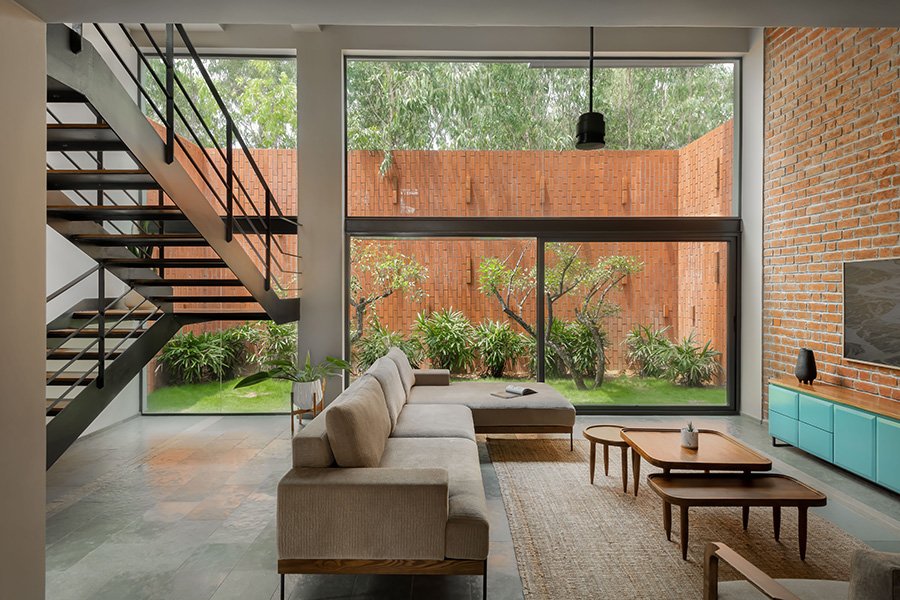
One of the most effective materials used in sustainable residential architecture is the compressed stabilised earth block (CSEB). Manufactured using locally available soil, these blocks require significantly less energy than conventional fired clay bricks.
Earth block walls possess excellent thermal mass, absorbing heat during the day and releasing it gradually as temperatures fall. This helps maintain comfortable indoor temperatures throughout the year while reducing the need for mechanical cooling.
Imagine a west-facing family home in Bangalore constructed with exposed earth block walls. Even during the hottest afternoons, the interiors remain noticeably cooler compared to conventional construction. The exposed finish also eliminates plaster, reducing both material usage and maintenance.
Many architects in Bangalore specify earth blocks because they combine sustainability, durability and timeless architectural character.
Natural Stone: Local, Durable and Climate Responsive
Natural stone has long been a preferred building material in Karnataka, and it continues to play an important role in sustainable architecture. Granite, Shahabad stone, slate and locally available schist are durable, low-maintenance materials with excellent thermal performance.
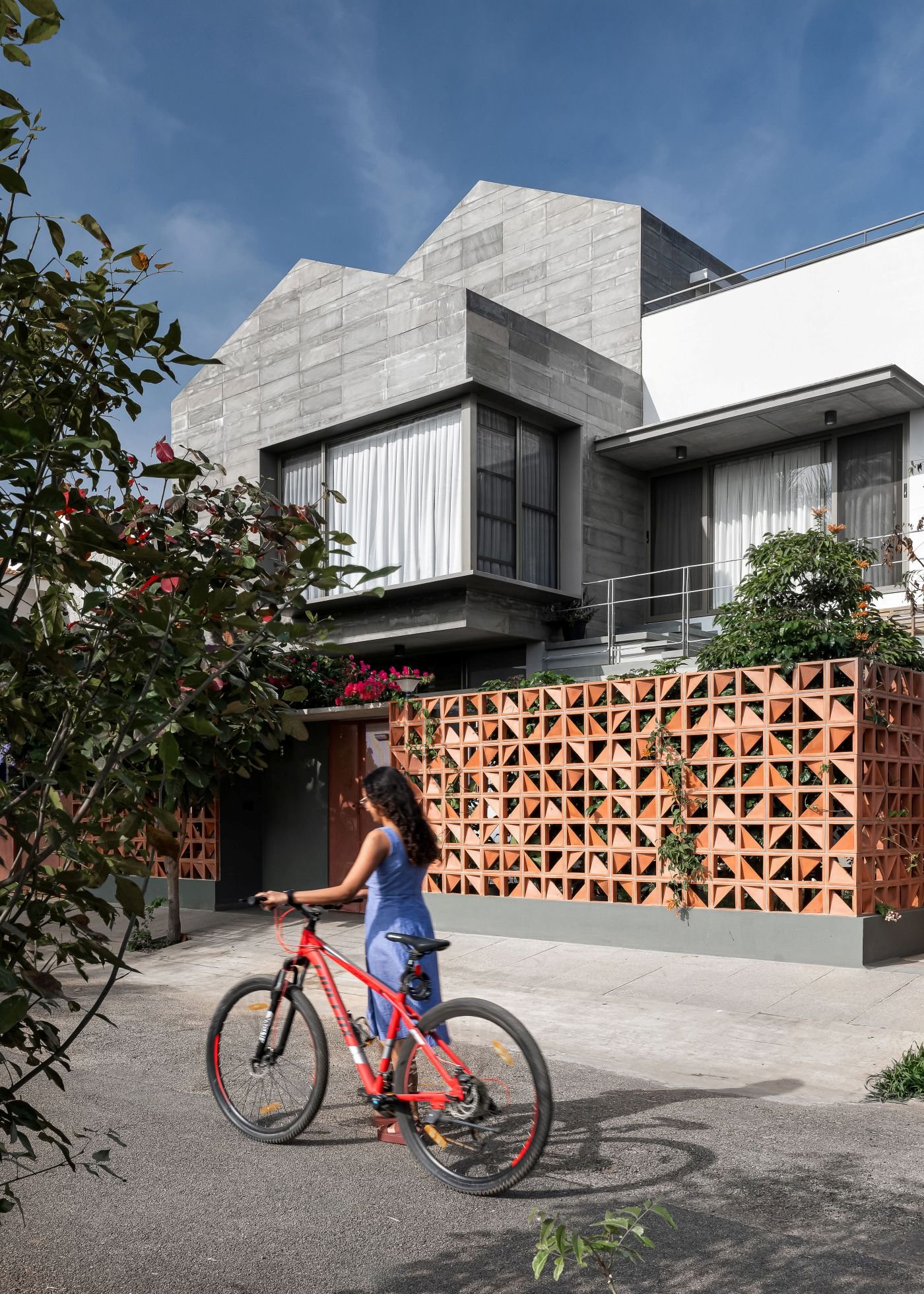
A particularly effective strategy involves using perforated stone screens on west-facing façades. These screens filter harsh sunlight while allowing natural ventilation and preserving visual connection with the outdoors. The resulting shaded buffer significantly reduces heat entering the home.
This approach demonstrates how residential architects in Bangalore combine traditional materials with contemporary design to create energy-efficient homes that respond intelligently to the local climate.
Bamboo and Reclaimed Timber
Sustainable architecture also encourages the use of rapidly renewable and reclaimed materials.
Engineered bamboo is increasingly used for pergolas, ceilings, decks and privacy screens. Since bamboo regenerates quickly after harvesting, it is one of the world’s most sustainable natural building materials.
Similarly, reclaimed timber salvaged from old homes and warehouses gives valuable hardwood a second life. Old teak beams can become staircase handrails, dining tables or exposed ceiling members, adding warmth and character while reducing demand for newly harvested timber.
These materials demonstrate that sustainability can enhance both environmental performance and architectural beauty.
Lower Carbon Construction
Reducing the carbon footprint of construction is becoming a major priority for architects in Bangalore. Cement production is one of the largest contributors to global carbon emissions, making alternative building products increasingly important.
Fly ash bricks utilise industrial waste generated by thermal power plants while offering excellent strength and dimensional accuracy. Likewise, low-carbon concrete mixes partially replace cement with fly ash or slag, significantly reducing embodied carbon without compromising structural performance.
When these materials are combined with efficient structural design, homes become considerably more sustainable from the day construction begins.
Water Conservation Through Intelligent Design
Water management has become an essential component of sustainable residential architecture in Bangalore.
Rainwater harvesting systems collect rooftop runoff for reuse or groundwater recharge, helping reduce dependence on municipal water supplies. Greywater from showers and wash basins can be treated and reused for landscaping, while permeable paving allows rainwater to infiltrate naturally into the soil.
For example, a thoughtfully designed residence may combine recharge wells, bioswales, native planting and efficient irrigation to create a landscape that requires significantly less water while supporting local biodiversity.
These strategies are increasingly recommended by residential architects in Bangalore as water security becomes a growing concern across the city.
Passive Design for Energy-Efficient Homes
One of the defining characteristics of sustainable architecture is passive design. Instead of relying primarily on technology, passive design works with nature to reduce energy consumption.
Proper building orientation, shaded windows, insulated roofs, thermal mass, ventilated courtyards and cross ventilation create naturally comfortable interiors. These measures can dramatically lower electricity consumption even before solar panels or renewable energy systems are installed.
Many architects in Bangalore also integrate rooftop solar photovoltaic systems, solar water heaters, LED lighting and energy-efficient appliances to further reduce a home’s environmental impact and long-term operating costs.
The result is a home that is comfortable, resilient and significantly less expensive to run.
Designing Homes That Last
An often-overlooked aspect of sustainability is durability. The greenest building is often the one that does not need to be rebuilt.
Flexible floor plans, durable materials and timeless design allow homes to adapt to changing family needs over decades. Spaces that can evolve into home offices, guest rooms or accommodation for ageing parents reduce the need for costly future renovations.
This long-term thinking is becoming central to the philosophy of leading residential architects in Bangalore, who increasingly view sustainability as creating homes that remain functional and relevant for generations.
The Future of Sustainable Residential Architecture in Bangalore
As environmental awareness continues to grow, sustainable architecture will become the benchmark for high-quality residential design rather than an optional feature. Homeowners are increasingly recognising that sustainable homes offer healthier living environments, lower energy bills, improved thermal comfort and greater long-term value.
By combining passive design, climate-responsive planning, locally sourced materials, water conservation and renewable energy, architects in Bangalore are redefining how modern homes are designed. At the same time, experienced residential architects in Bangalore are proving that sustainability and contemporary design can work hand in hand to create homes that are beautiful, efficient and built for the future.
For anyone planning to build a home, investing in sustainable architecture is no longer simply an environmental choice—it is a practical decision that delivers lasting benefits for homeowners, communities and the city itself.